
Master’s degree in Ephemeral Architecture and Temporary Spaces (MEATS). ELISAVA School of Design and Engineering. http://meats.elisava.net/
‘Far away, so close’ is a proposal developed in the unit that MEATS dedicates each year to emergency architecture. The global pandemic generated by the sudden outbreak of COVID-19 has prompted us to focus our energies on studying its effects and on offering ways of improving this new reality, which is ours for the foreseeable future.
‘Far away, so close’ began with extensive research into how the pandemic is transforming the organization of our domestic and collective habitats, as well as the effects of these changes on the physical, mental and emotional health of our society. One of the main conclusions of this research is the urgent need to revise the concept of social distancing, a controversial notion that could have devastating consequences if, as can be expected, this new reality persists over time.
Now is the time for new proposals that posit physical distancing as an opportunity to generate dynamics that foster empathy and social cohesion, steering clear of regulatory and coercive solutions that merely offer diminished versions of the experiences we had before the pandemic.
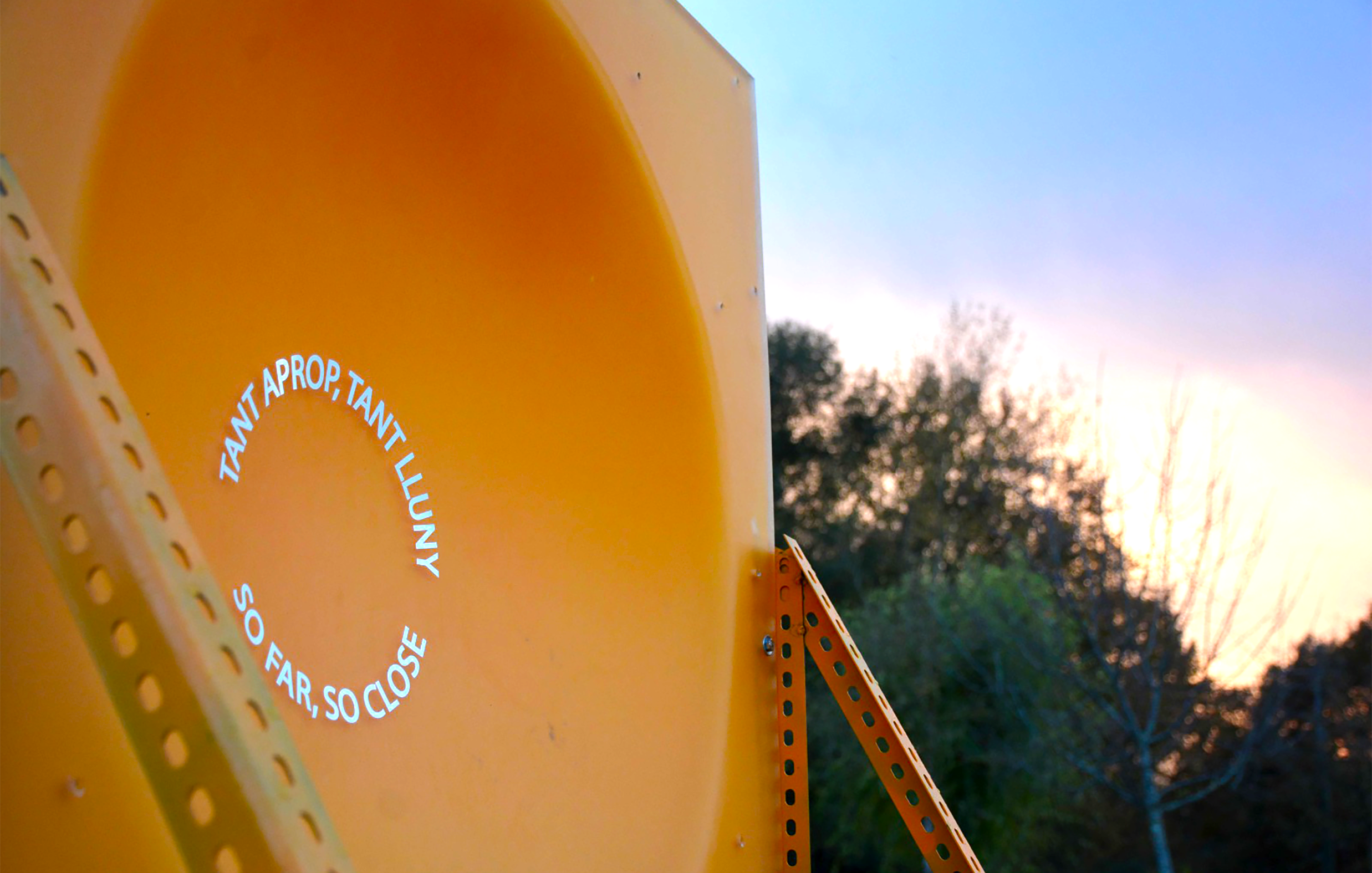
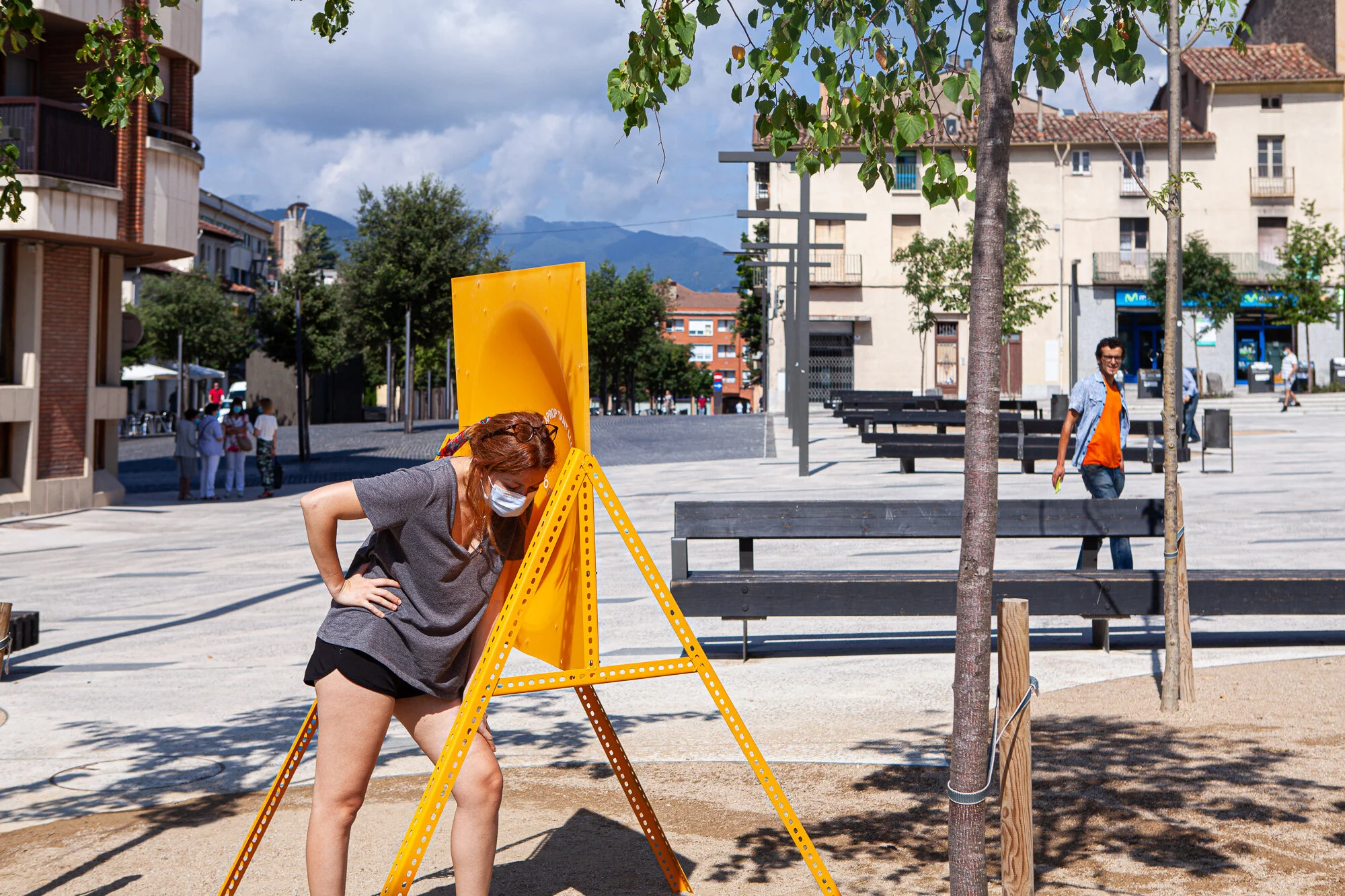
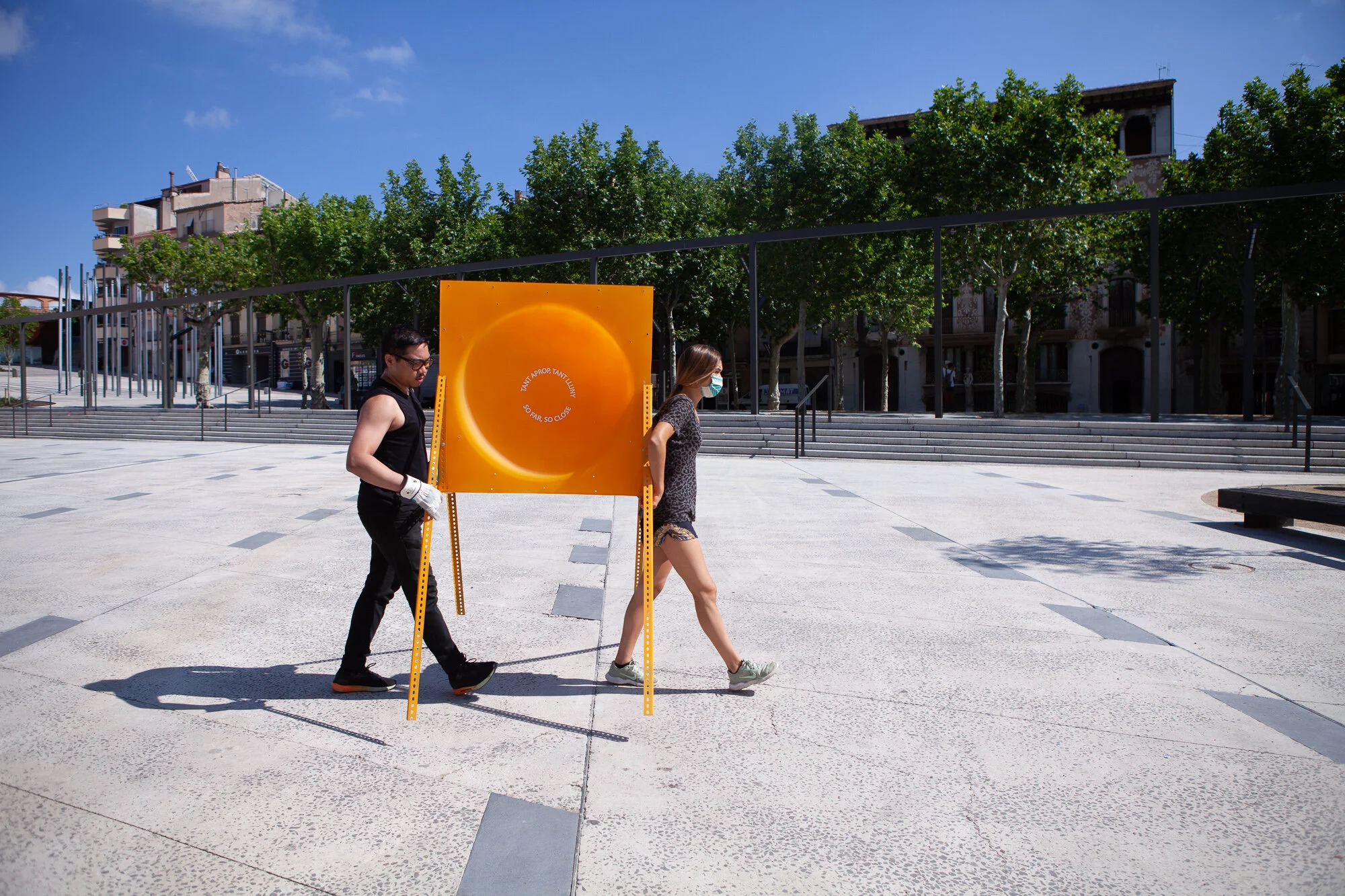
‘Far Away, So Close’ proposes a new dynamic for relating in collective space that harnesses physical distance as a factor for activating and intensifying intimate relationships. The social distancing implemented in response to the pandemic is understood as an opportunity to create interaction instead of isolation. A series of mobile sound mirrors installed in public space engender different modes of interaction through the logic of play: a giant game of Chinese whispers; a concert where the music is heard on separate tracks; a personal message conveyed across a crowded square...
‘Far Away, So Close’ lets us whisper a secret from 20 metres away, an intimate experience made magical by distance.
The project was conceived, developed and built entirely by MEATS students and by their professors Xevi Bayona, Toni Montes and Roger Paez. It received support from the Olot City Council, and the first installation in public space took place in the Firal in Olot, on 17 July 2020.