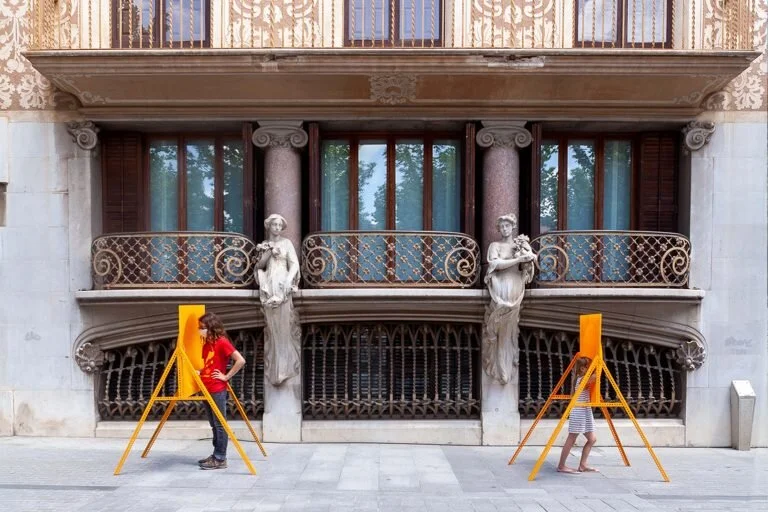
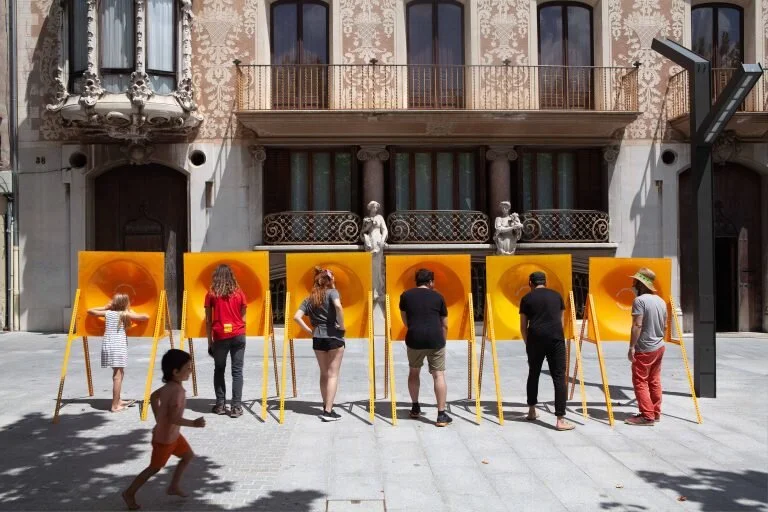
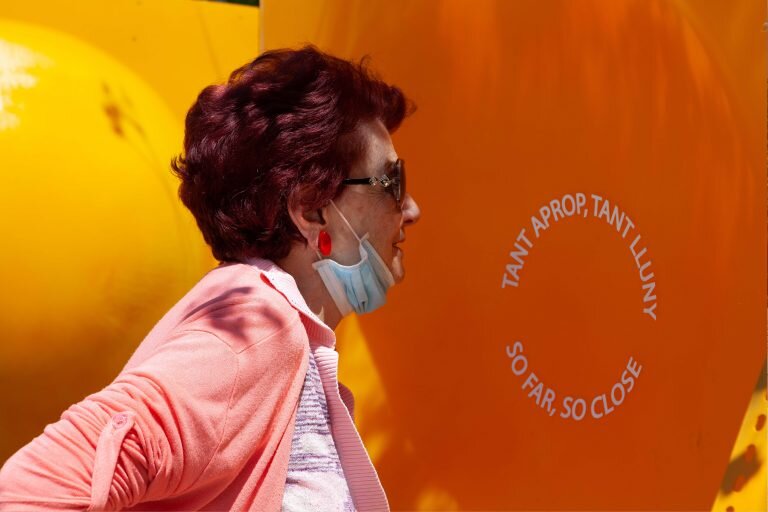
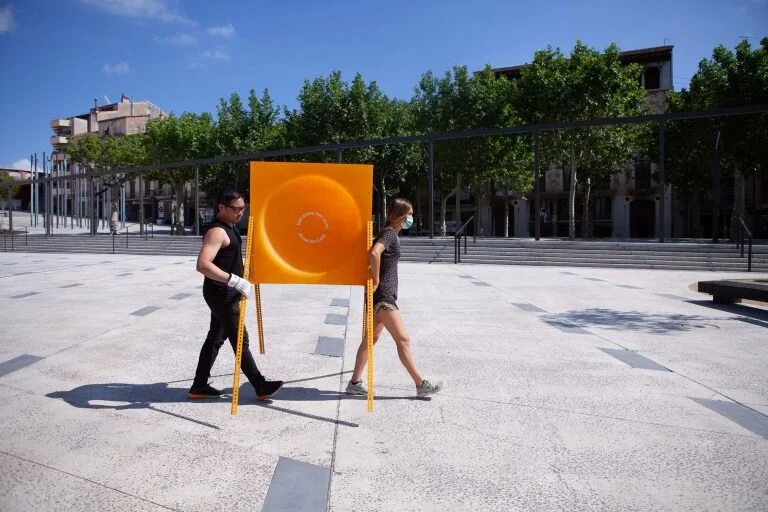
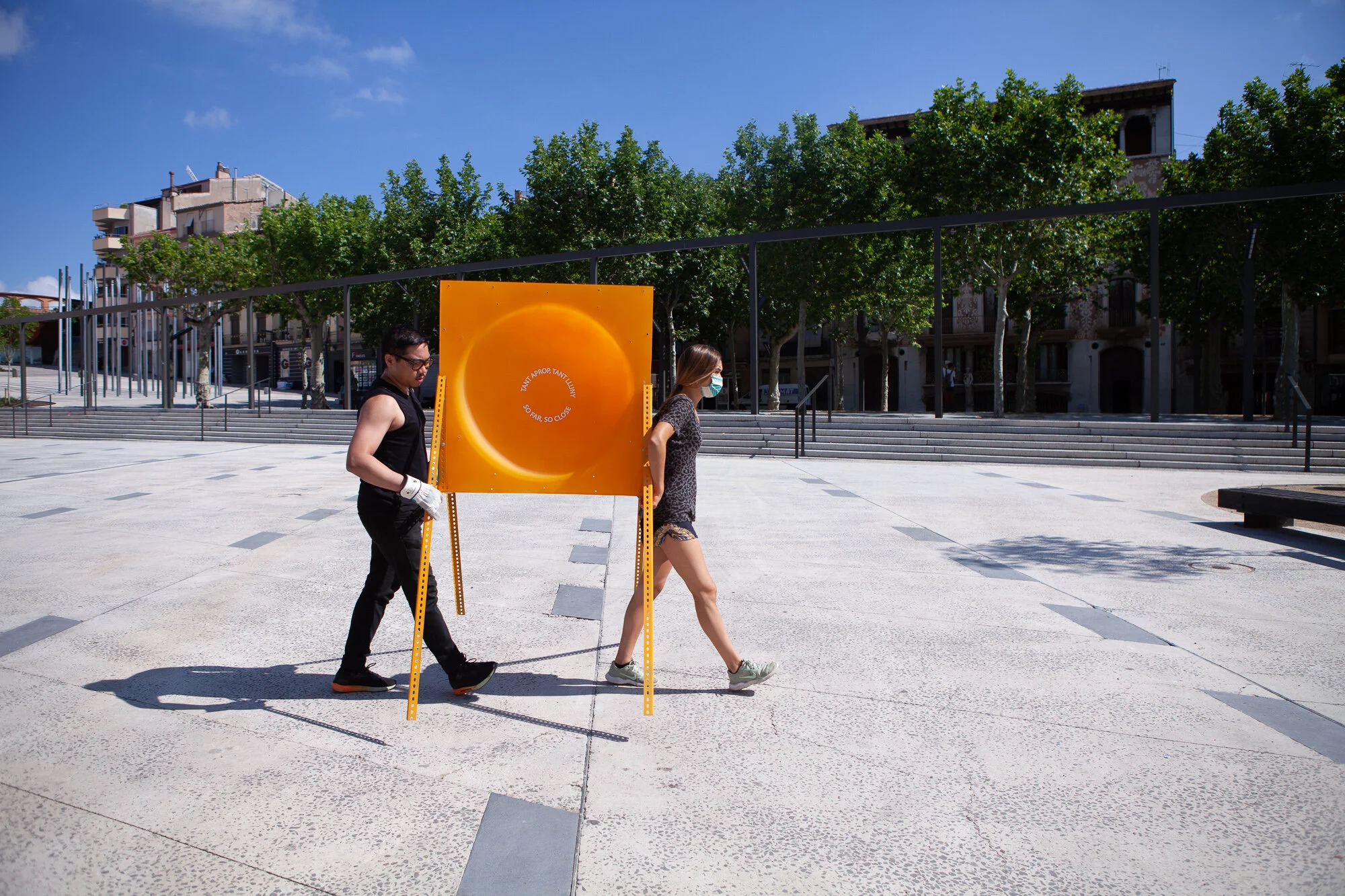
Starting on 21 October, ‘Far Away So Close’ (MEATS 19-20) will be installed in three different locations in Olot during the next 9 weeks to foster civic interaction in times of pandemics. First, it will be in Parc Espunya, a public park next to Fluvià river, then it will be moved to Bonavsita neighbourhood and will finish its journey in Pla de Dalt.
"FAR AWAY, SO CLOSE," Press Release
Master’s degree in Ephemeral Architecture and Temporary Spaces (MEATS). ELISAVA School of Design and Engineering. http://meats.elisava.net/
‘Far away, so close’ is a proposal developed in the unit that MEATS dedicates each year to emergency architecture. The global pandemic generated by the sudden outbreak of COVID-19 has prompted us to focus our energies on studying its effects and on offering ways of improving this new reality, which is ours for the foreseeable future.
‘Far away, so close’ began with extensive research into how the pandemic is transforming the organization of our domestic and collective habitats, as well as the effects of these changes on the physical, mental and emotional health of our society. One of the main conclusions of this research is the urgent need to revise the concept of social distancing, a controversial notion that could have devastating consequences if, as can be expected, this new reality persists over time.
Now is the time for new proposals that posit physical distancing as an opportunity to generate dynamics that foster empathy and social cohesion, steering clear of regulatory and coercive solutions that merely offer diminished versions of the experiences we had before the pandemic.
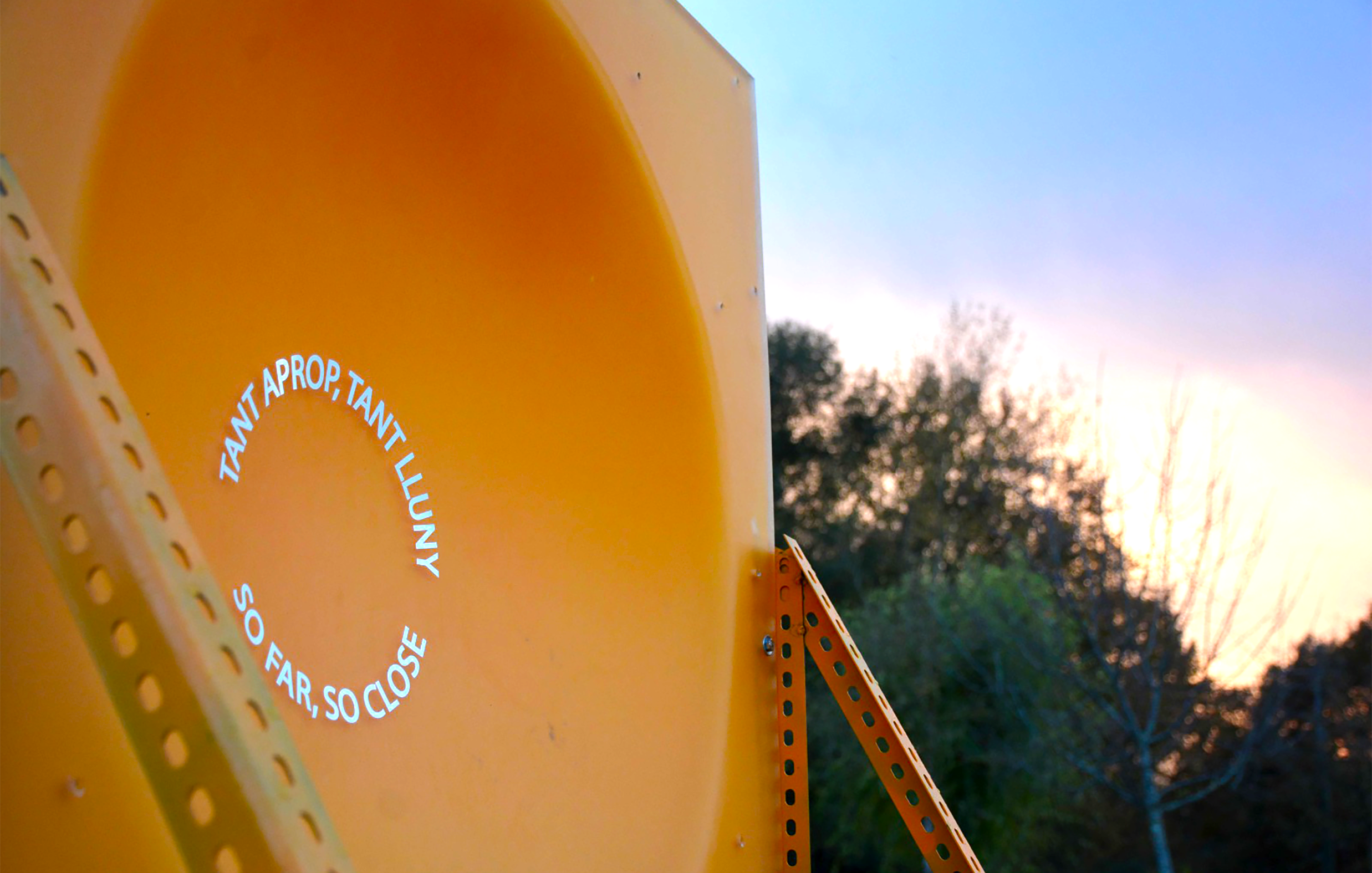
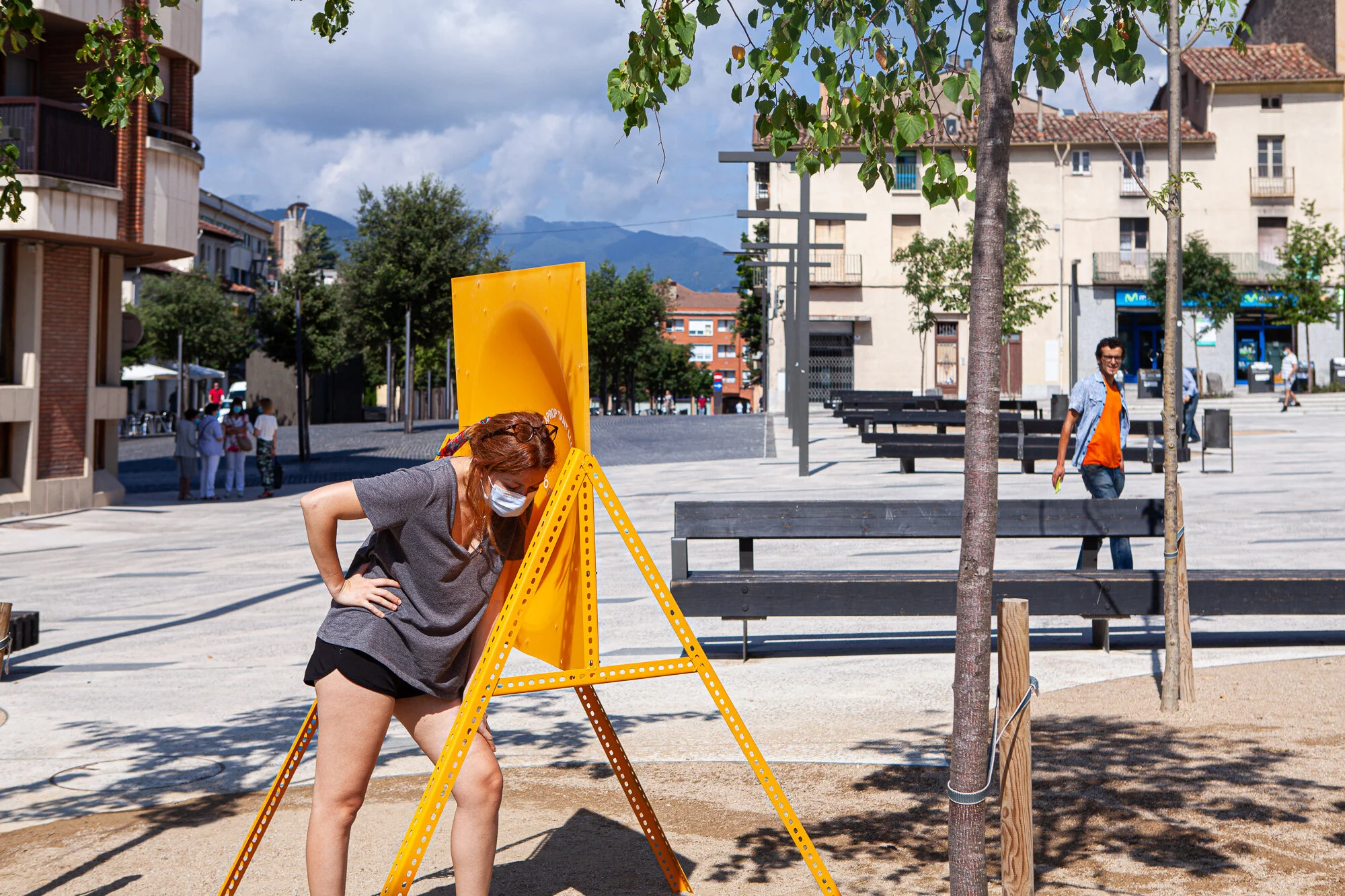
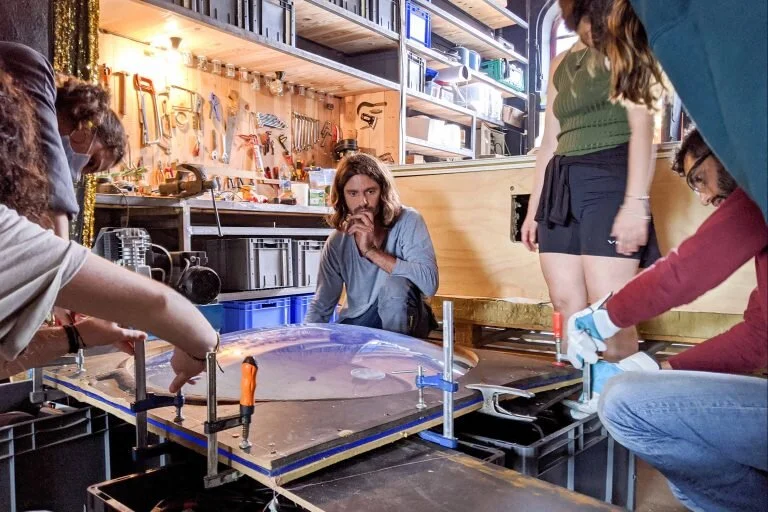
‘Far Away, So Close’ proposes a new dynamic for relating in collective space that harnesses physical distance as a factor for activating and intensifying intimate relationships. The social distancing implemented in response to the pandemic is understood as an opportunity to create interaction instead of isolation. A series of mobile sound mirrors installed in public space engender different modes of interaction through the logic of play: a giant game of Chinese whispers; a concert where the music is heard on separate tracks; a personal message conveyed across a crowded square...
‘Far Away, So Close’ lets us whisper a secret from 20 metres away, an intimate experience made magical by distance.
The project was conceived, developed and built entirely by MEATS students and by their professors Xevi Bayona, Toni Montes and Roger Paez. It received support from the Olot City Council, and the first installation in public space took place in the Firal in Olot, on 17 July 2020.
BTS + "Beautiful Failures," unearthing the Pavilion
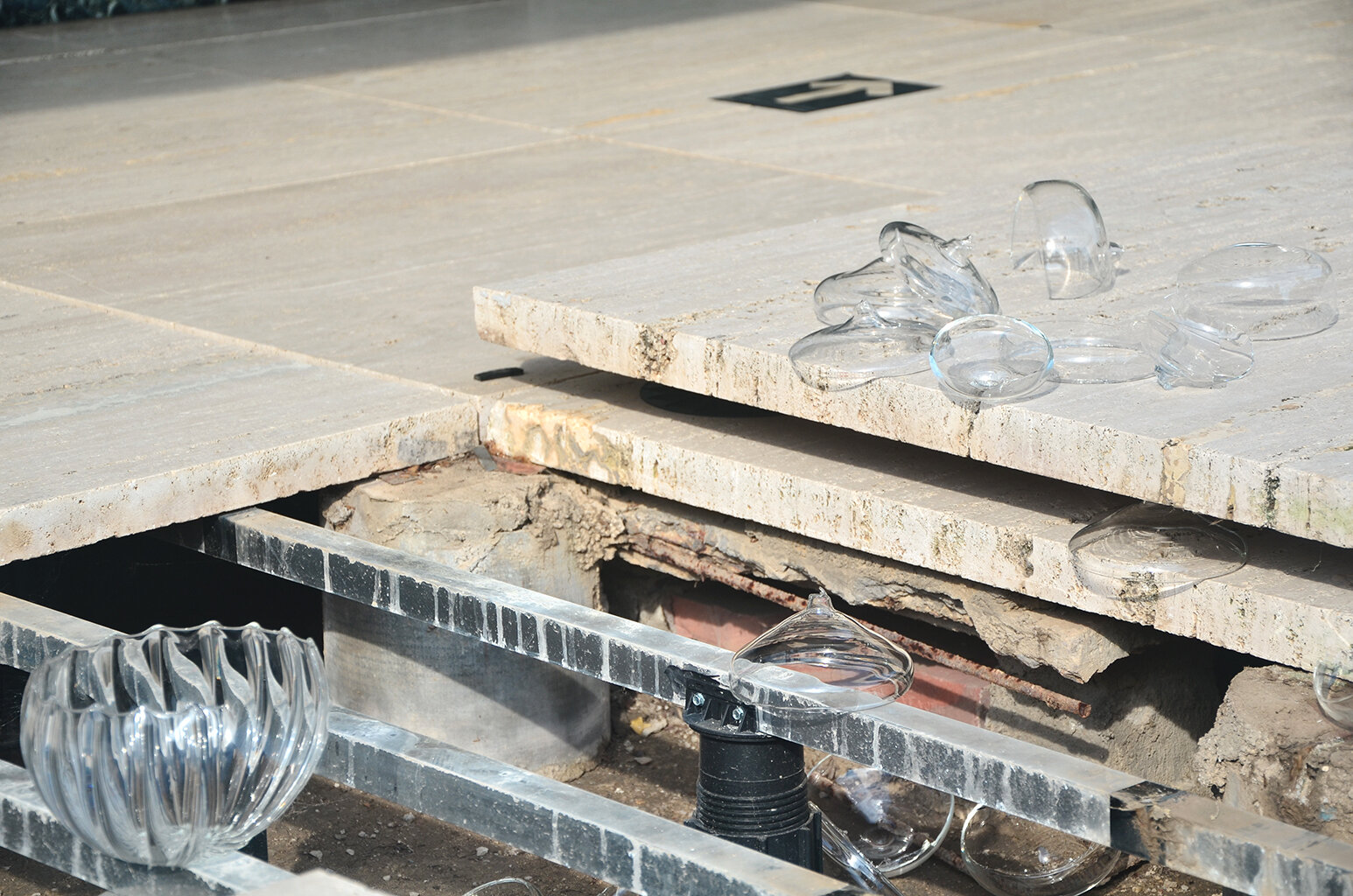
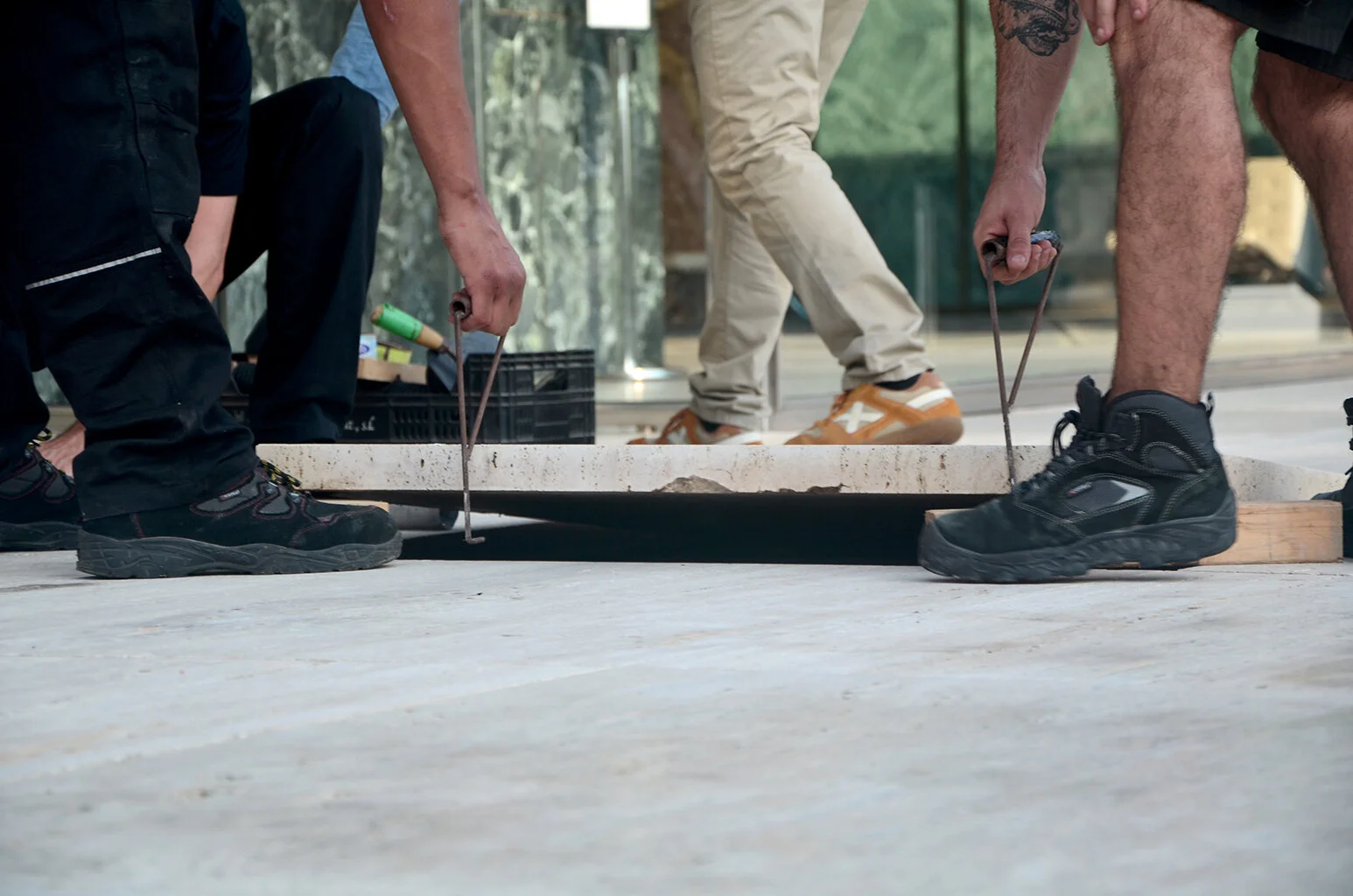
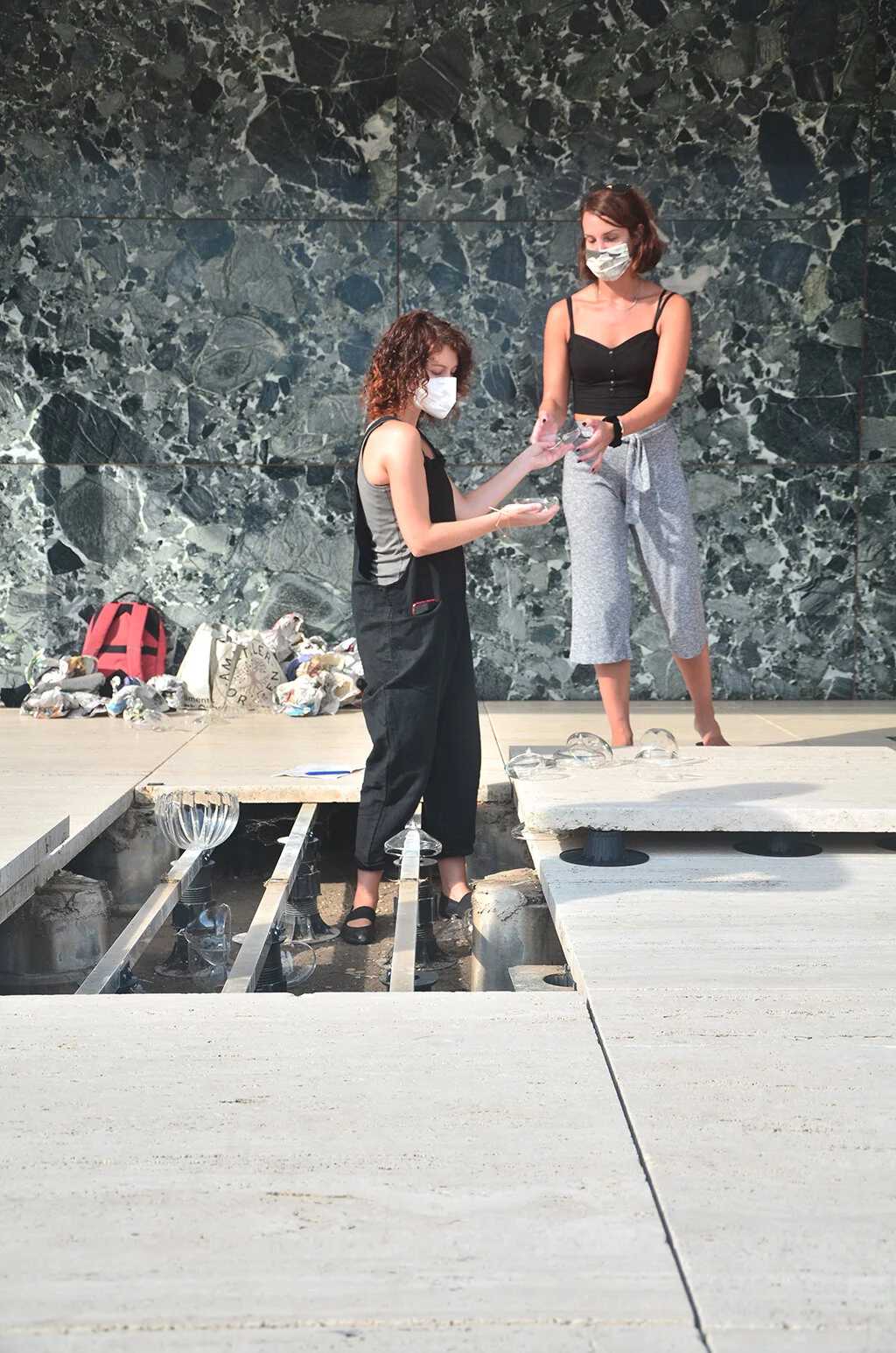
Unearthing the Mies van der Rohe Pavilion in Barcelona! A century later and finally gave breath to its foundation. Found some very interesting trinkets underneath—a map, coins, gold stars. Truly an experience, kind of like when Elio and Oliver were pulling those Greek statues out of the lake in CMBYN 😄. Looking forward to seeing this project come to light ⚡ Cheers to the team @stellaraholamatutes @meats.elisava @fundaciomies
MEATS Workshop in Olot, Spain
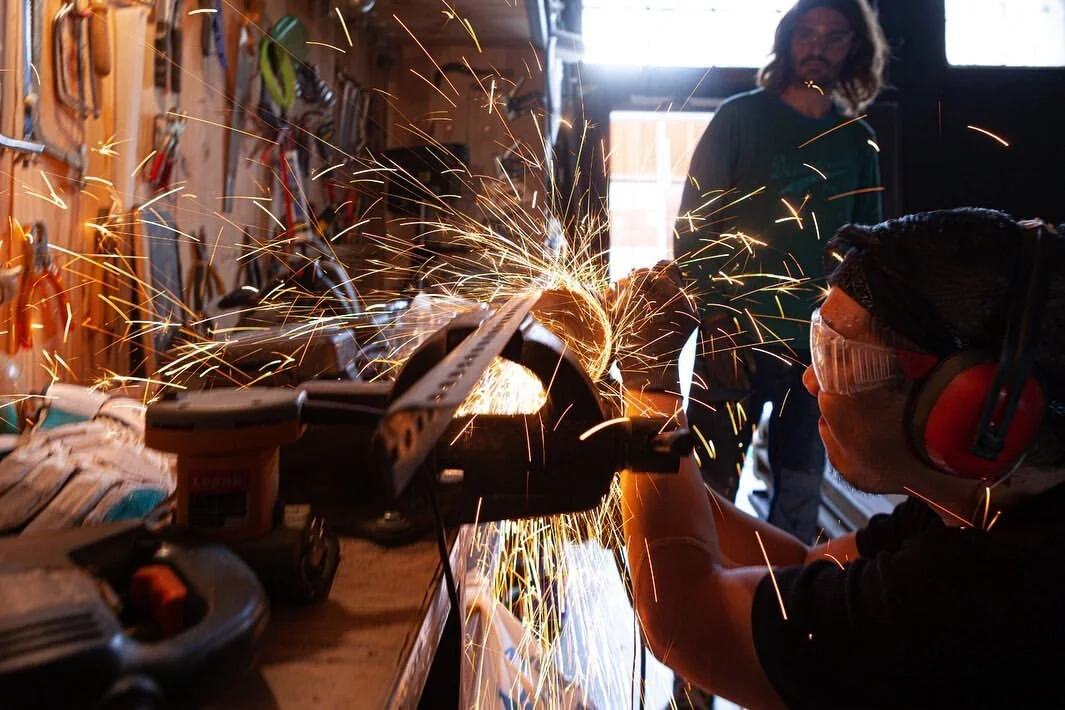
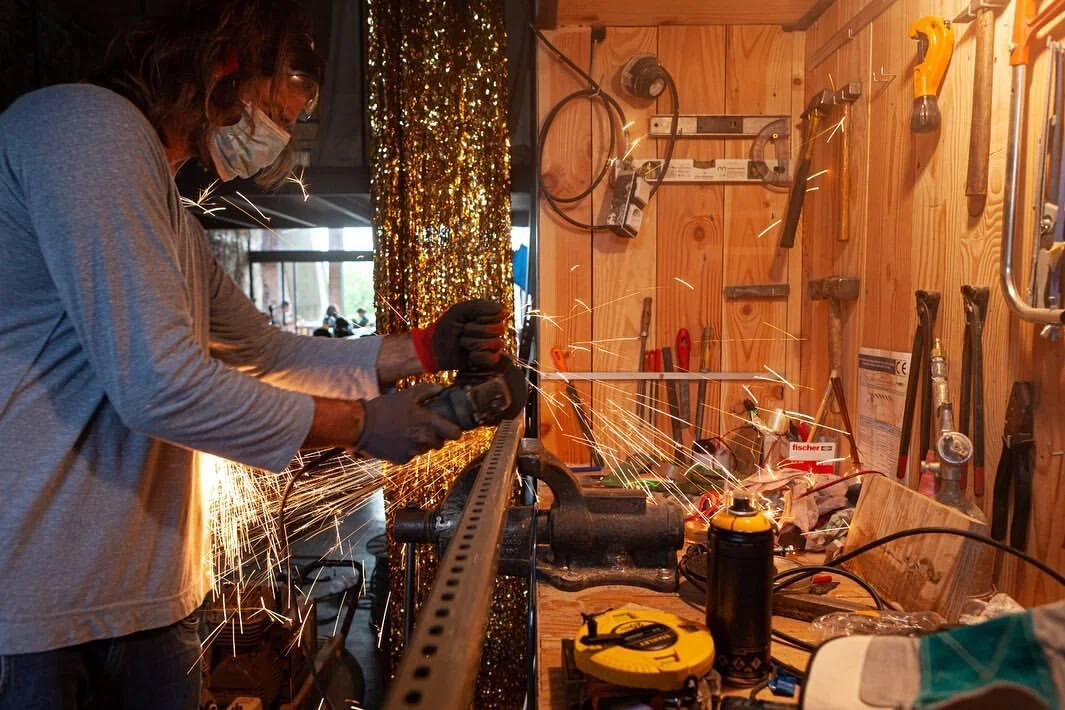
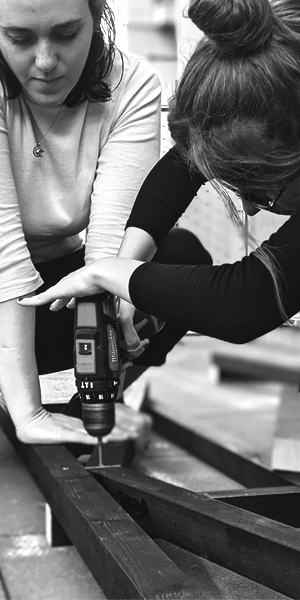
In keeping to the CO-VID precautions imposed within the country, our team spent a part of the time co-living and working at Xevi Bayona’s workshop.
‘Far Away, So Close’ began with extensive research into how the pandemic is transforming the organization of our domestic and collective habitats, as well as the effects of these changes on the physical, mental and emotional health of our society. One of the main conclusions of this research is the urgent need to revise the concept of social distancing, a controversial notion that could have devastating consequences if, as can be expected, this new reality persists over time.
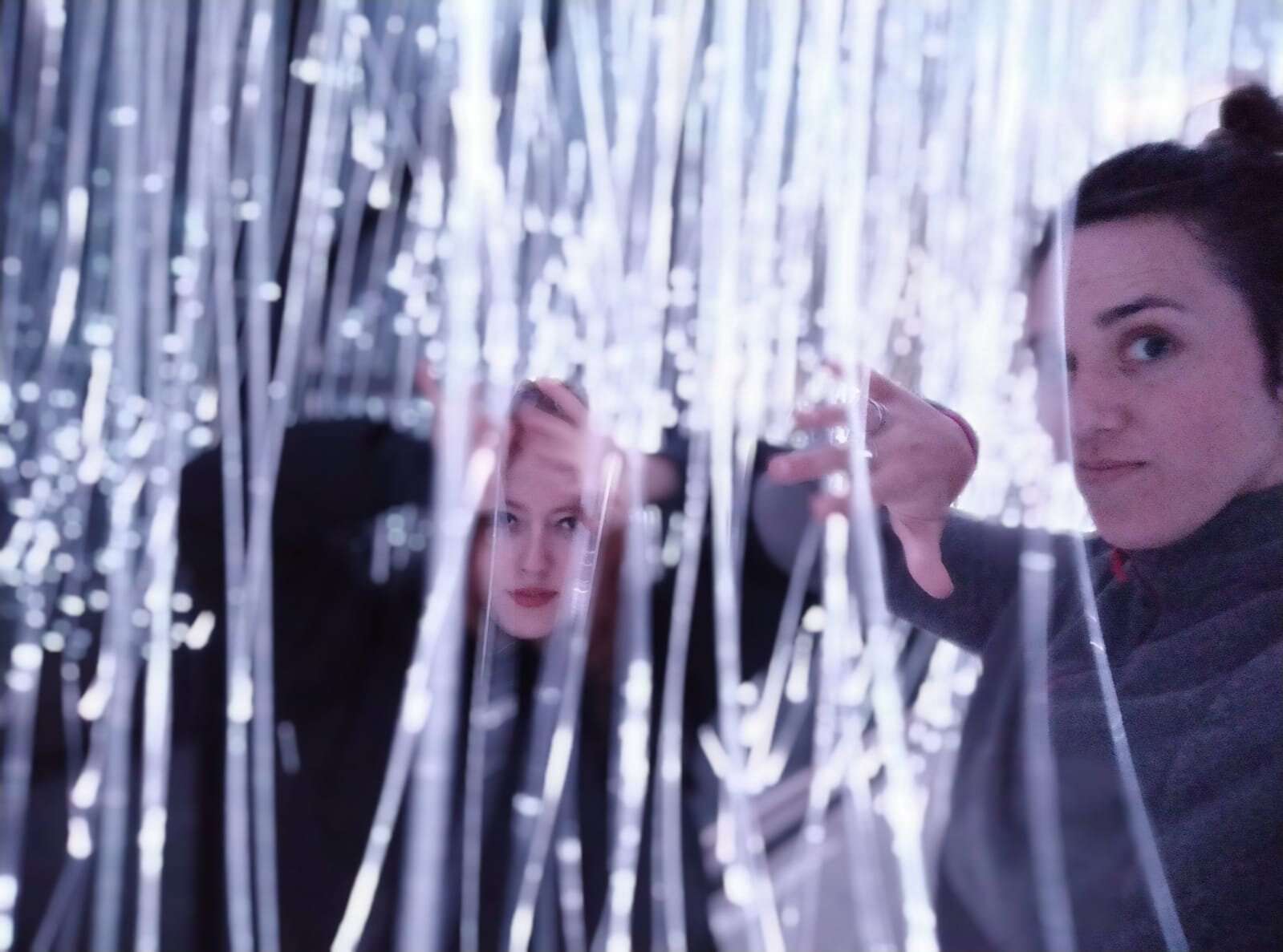
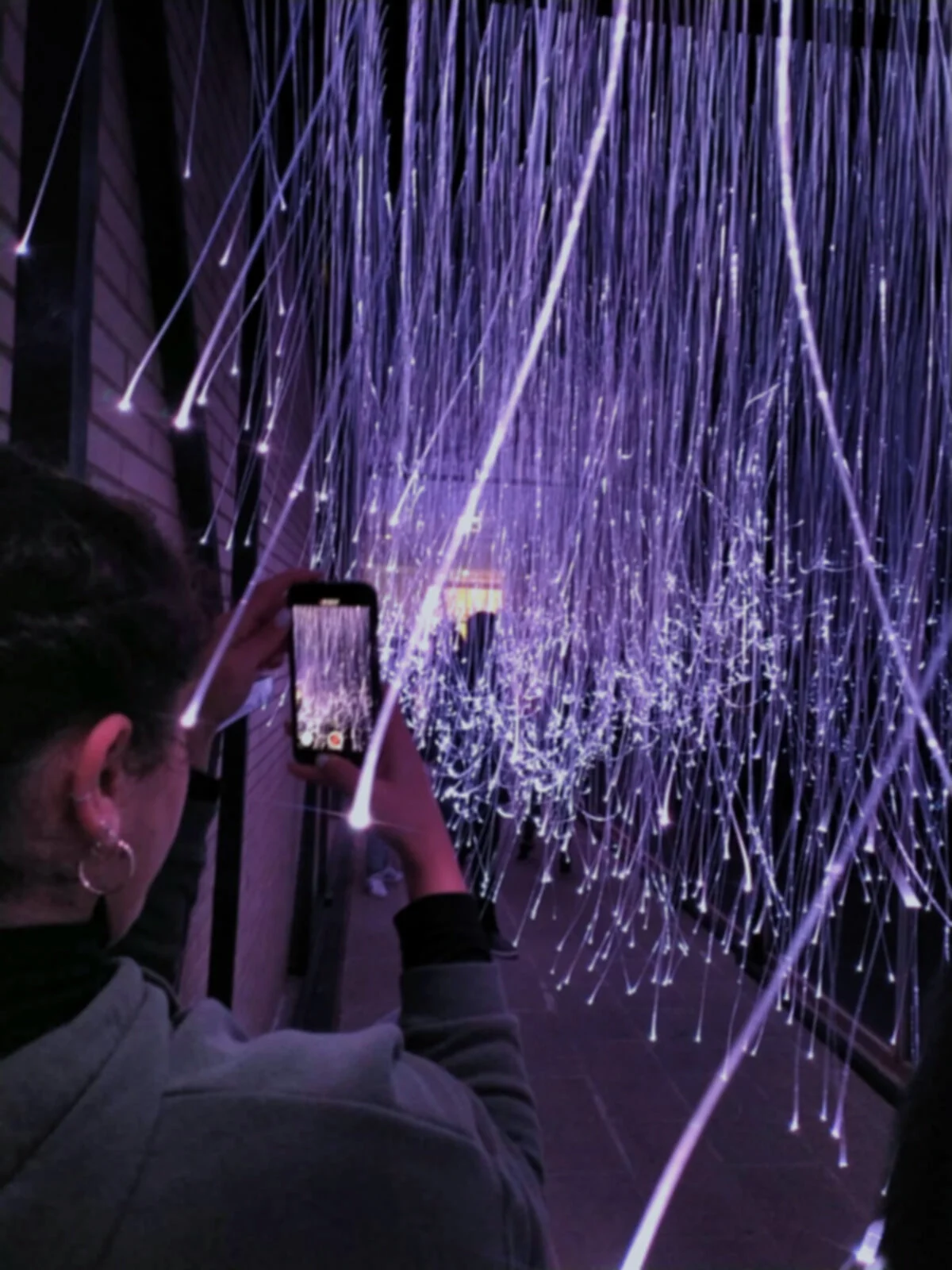
BTS + ÀNIMA, Light as an Immersive Experience
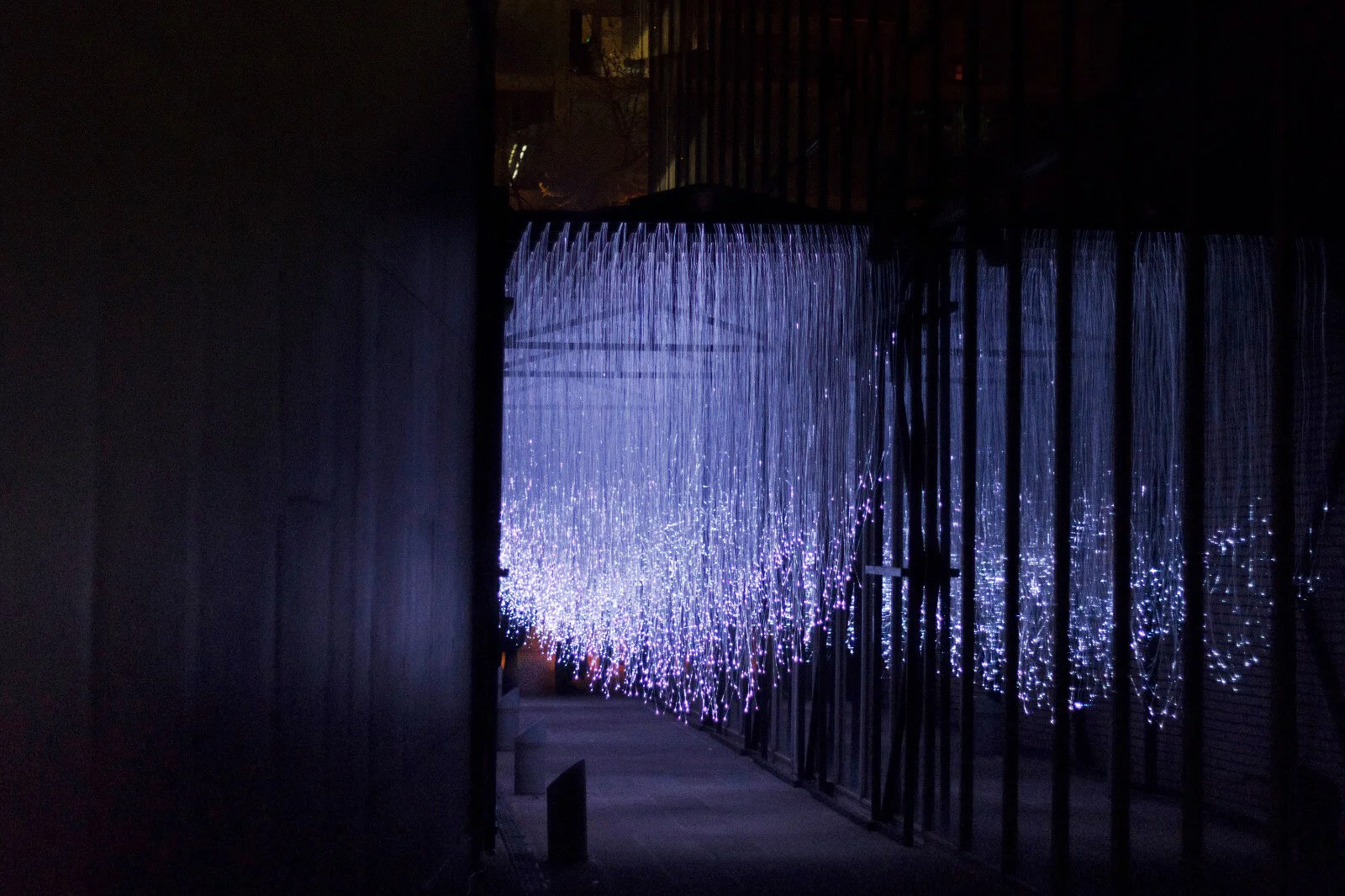
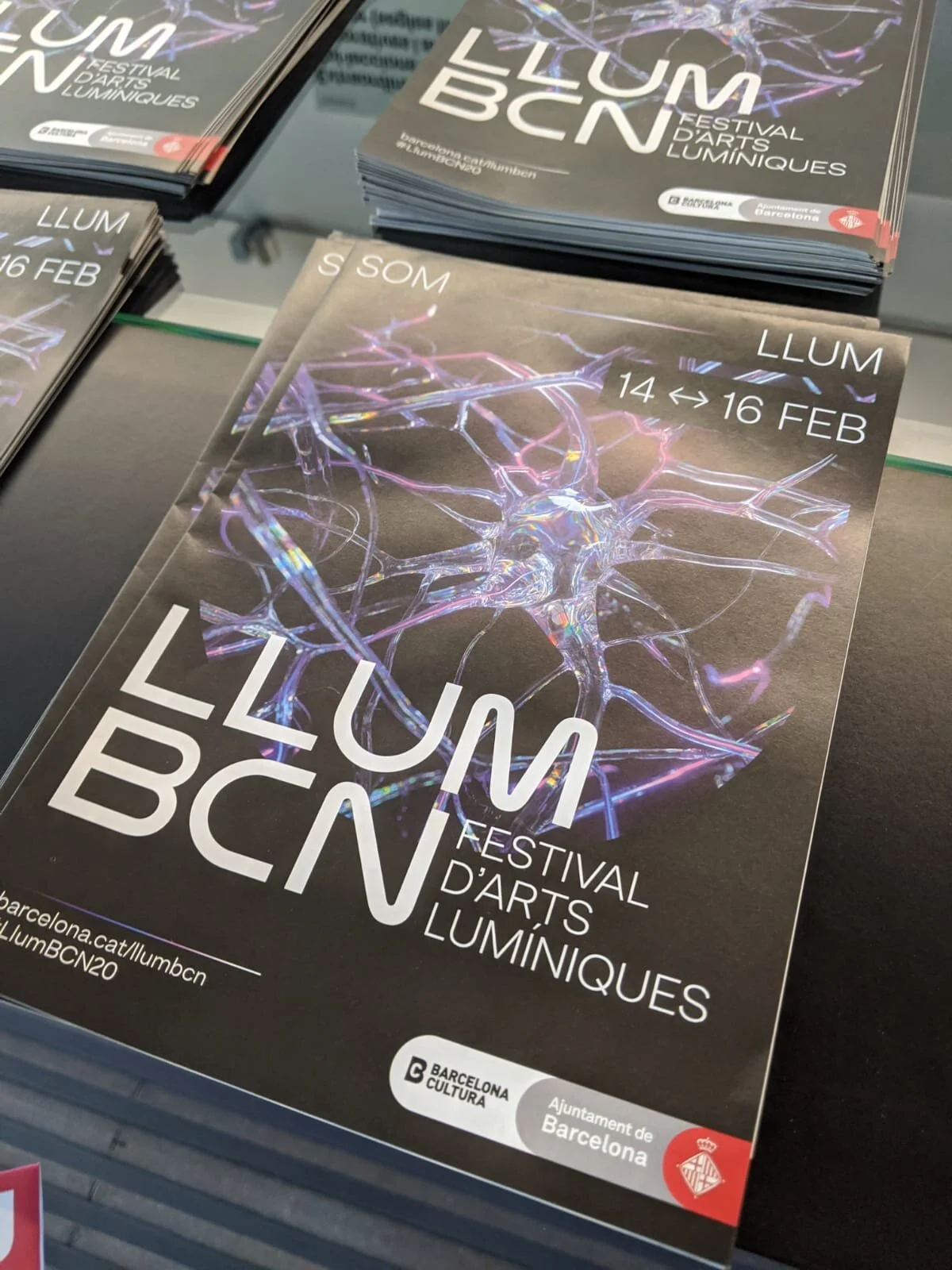
When we were presented with the opportunity to create an immersive lighting experience for one of the biggest light festivals in Barcelona, our level of excitement was equally met with a few challenges--from our restrictive site location to the newly enforced regulations on participating (and future) projects--thus, we began to adopt a strategy that focused on methods of low-tech yet high impact.
Equal in challenge to the conceptual solution was the production aspect. With a strategy in place, we focused on using minimal materials in the installation to highlight the importance of light as a primary material and to avoid having large amounts of unresolved materials once the festival was over.
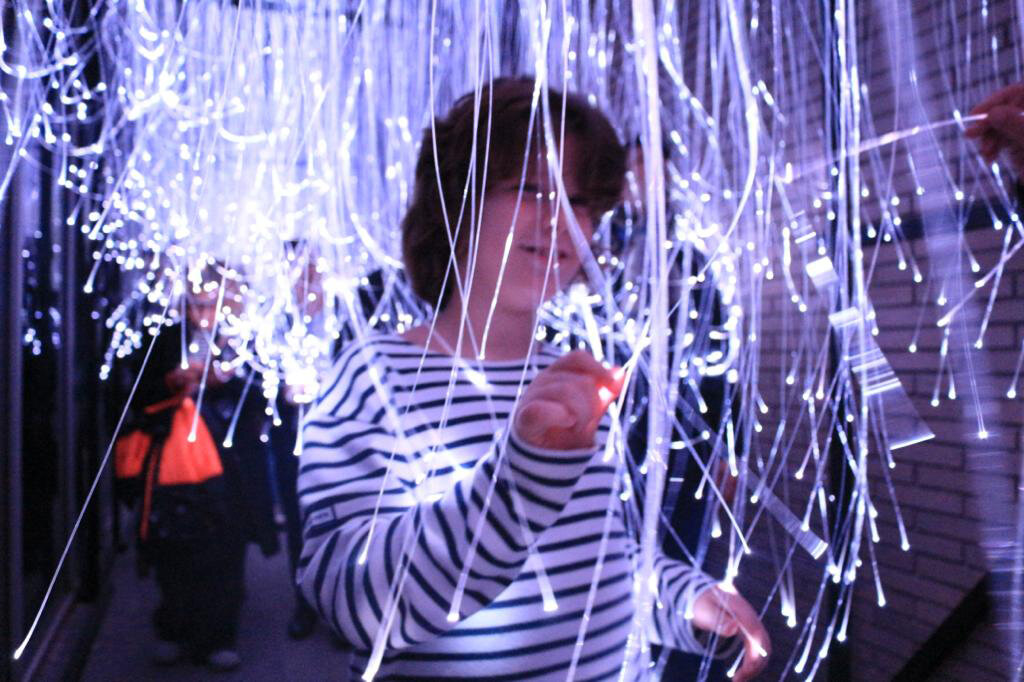
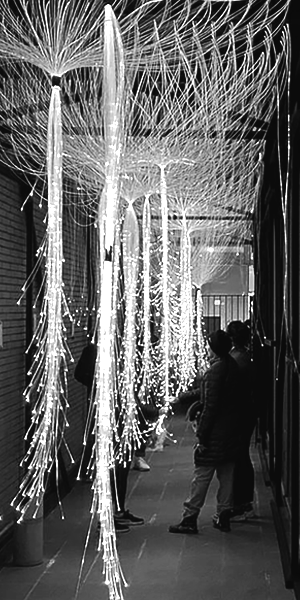
Fiber optics were chosen as the lighting component, in part due to its versatile nature, flexible application, and low impact on the environment--low energy consumption, heat-free illumination, and its ability to be recycled or upcycled.
BTS + "Beautiful Failures"
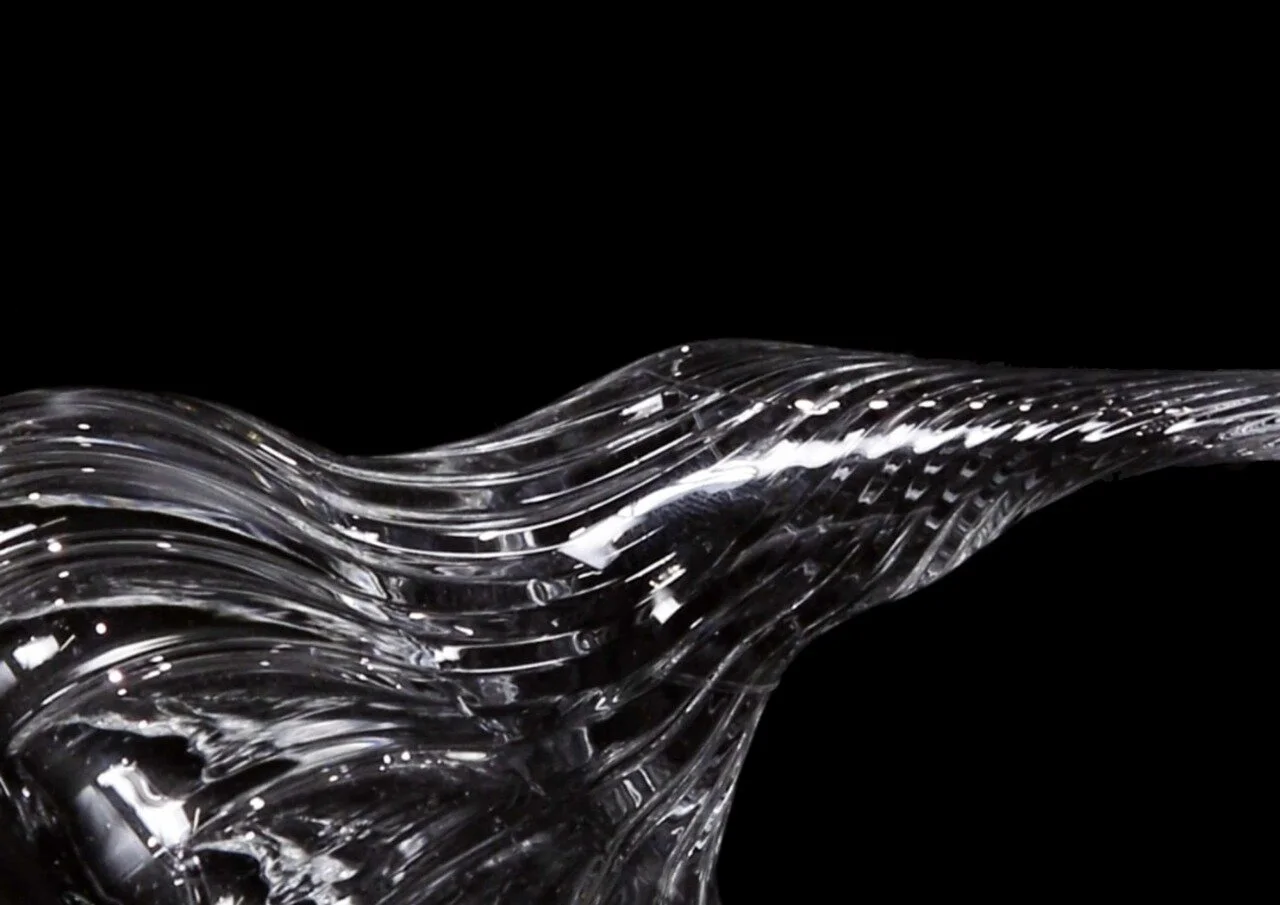
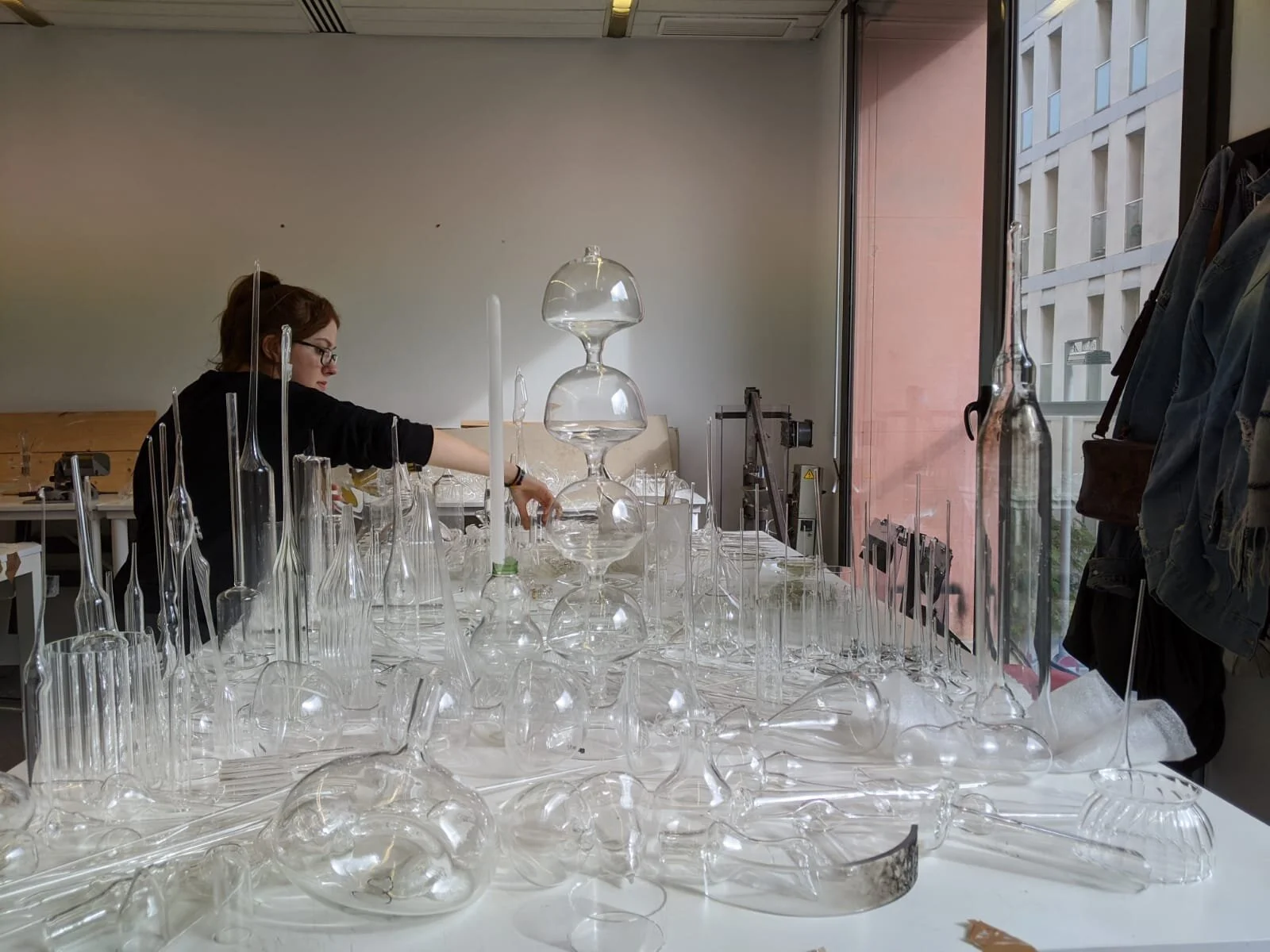
Beautiful Failures is a collection of discarded hand blown glass pieces, collected by Elisava’s Masters in Ephemeral Architecture and Temporary Space Design students, under the supervision of Stella Rahola Matutes and Roger Paez, in collaboration with Fundació Mies van der Rohe.
BTS + ÀNIMA, Llum Festival 2020
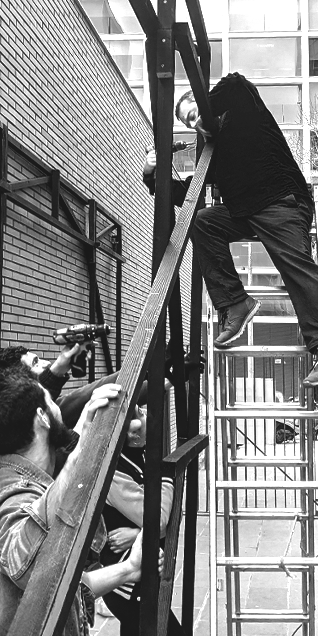
BTS + ÀNIMA, Installation on-site
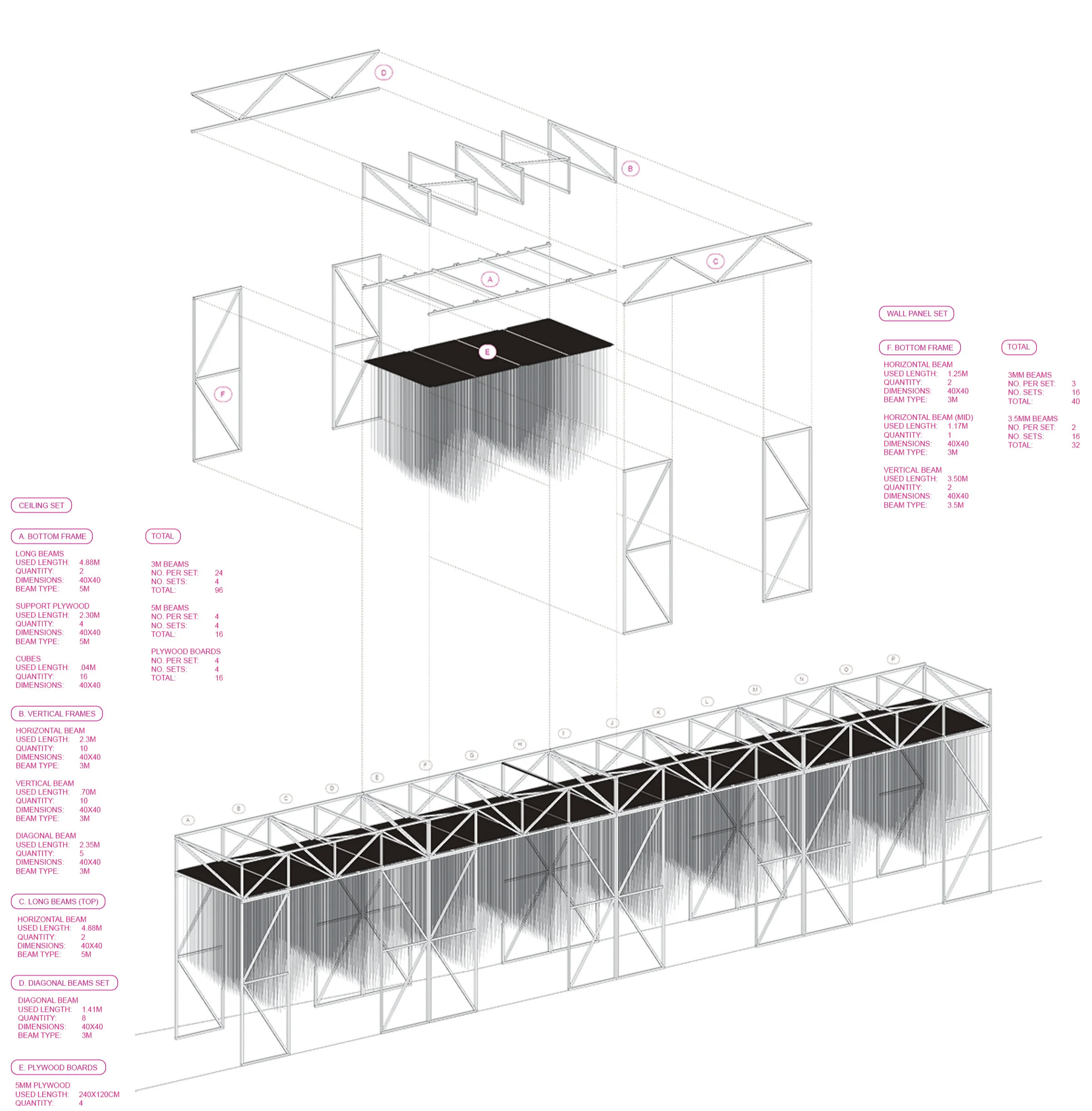
With Anima set to be a long tunnel of fiber optic lights suspended from the ceiling of the structure, the construction process needed to ensure that the final iteration used the least amount of materials, while meeting the expectations of a fully immersive experience.
NONOTAK STUDIO @ FUTURE FORWARD EVENT
FUTURE FORWARD EVENT SERIES PRESENTED BY THE ALL-NEW TOYOTA PRIUS
Location:
Industria
775 Washington Street
New York, NY 10014
Saturday, Jun 4 2016
12:00PM - 5:00PM EDT